
Campaign Management
How to Organize a TTRPG Campaign
Build a campaign information hub that keeps characters, locations, sessions, rewards, and player updates easy to find.
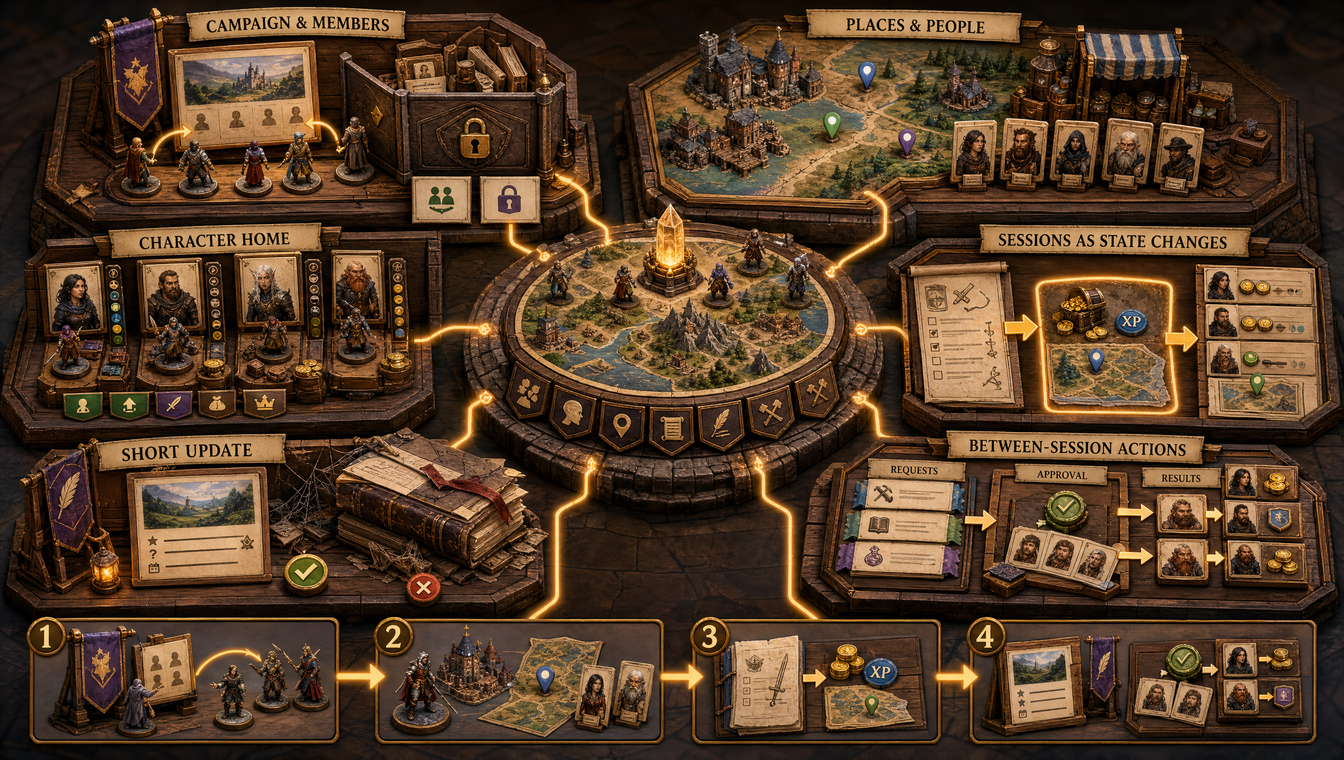
A useful campaign hub does not need to contain every thought the Game Master has ever written. It needs to give the group one reliable place to answer the questions that come up between sessions.
Start with the campaign and its members
Create the campaign, choose the settings your table needs, and invite players. Keep membership and permissions separate from public-facing campaign information so private notes stay private.
Give each character a home
Character profiles should keep identity, progression, equipment, currency, and campaign membership connected. Players can maintain their own information while the GM sees the party in context.
Organize places and people
Record cities, towns, villages, wilderness areas, maps, vendors, and important NPCs as the party encounters them. Focus first on information players will need again; add deeper worldbuilding as it becomes relevant.
Treat sessions as state changes
Session notes are more useful when they connect to what changed: gold gained, XP awarded, treasure distributed, and locations discovered. Gold & XP session finalization can award XP and currency so the campaign record reflects the adventure.
Publish a short update
A campaign blog entry or announcement can summarize what happened, remind players about open questions, and set expectations for the next session. A short, consistent recap is more valuable than an ambitious journal that never gets published.
Keep between-session actions visible
Downtime requests, approvals, and results should live beside the rest of the campaign. That prevents decisions made in private messages from disappearing before game night.
See how these pieces fit together in the TTRPG campaign manager overview or create your campaign for free.